Concert and arena transport is the chauffeur booking category most consistently let down by the return journey. The outbound leg works because the timing is known and the venue is expecting traffic. The return leg, when fifteen thousand people leave an arena within twenty minutes of the last song, is where most operators fail to deliver what the customer thought they had booked.
This is not the customer’s fault. The booking process for concert transport often skips over the return entirely, focusing on the more straightforward outbound journey. The result is a group standing on a pavement outside the arena at 11pm with no idea where their driver is, while the operator’s phone goes to voicemail and the queue for taxis builds up around them.
The outbound journey to a concert is easy. The booker chooses a sensible pre-arrival time, the driver delivers the group to the venue area, and the group walks the last stretch to the entrance. This part rarely goes wrong.
The post-concert pickup is a different problem. The venue empties in roughly twenty minutes. Thousands of people are looking for taxis, ride-shares, or pre-booked vehicles simultaneously. The streets around the venue have temporary restrictions, with police directing traffic away from pedestrian flows. Pickup points designated by the venue may be a five to ten minute walk from the exit.
A chauffeur who has not done concert pickups before will often park in what looks like a sensible spot, then be moved on by stewards before the group emerges. The driver then circles the area looking for a legal stopping point while the group waits at the designated pickup. Phone signal in the immediate vicinity of a major venue is usually poor because of the volume of people on their phones. The group cannot reach the driver. The driver cannot reach the group.
The booking that works is the one where the operator has thought about this in advance. The booking that fails is the one where the post-concert pickup was treated as an afterthought.
The Manchester AO Arena is integrated with Victoria Station, which simplifies and complicates the pickup at the same time. The station has designated drop-off and pickup zones, but they are shared with rail passengers and become congested after major concerts. The streets around the arena have phased traffic management on event nights.
The Co-op Live arena, the newer venue near the Etihad, has its own pickup arrangements that differ from the AO Arena’s. The traffic patterns and the designated pickup zones are still being established and have changed since the venue opened.
The First Direct Arena in Leeds has pickup points around Clay Pit Lane and the surrounding area, with the timing affected by post-event traffic management. The route out of central Leeds is affected by which other events are running in the city centre on the same night.
The Utilita Arena in Sheffield has pickup arrangements around Broughton Lane, with the post-concert traffic affecting the route out toward the M1.
Each venue has its own pattern. An operator who does concert work at multiple venues knows each pattern. An operator new to concert work, or new to a specific venue, does not.
The booking conversation should establish, in writing, where the driver will be after the concert. Not “outside the arena” or “in the area”. A specific location agreed with the operator and confirmed back to the customer.
This is the detail that prevents the failure mode where the group is at one entrance and the driver is at another. The agreed pickup point should be visible from the venue exit, accessible to the vehicle within the venue’s traffic management, and a location both the driver and the group can find without phone contact.
For the major arenas, operators who do concert work regularly have established pickup points that work. They will share these at the booking stage if asked. An operator who does not have a specific answer is probably learning the venue with your booking.
After a major concert, mobile phone signal in the immediate vicinity of the arena is usually unreliable. Tens of thousands of people are on their phones, networks become congested, and calls and messages fail or are delayed.
This affects the booking because the standard “call the driver when you’re outside” approach often does not work. The call does not connect, or it connects after the group has been waiting for fifteen minutes already.
The fix is the pre-agreed pickup point that does not require a phone call to find. The driver is in a specific place at a specific time. The group walks to that place. The phone is a backup, not the primary coordination mechanism.
A pre-agreed pickup point still requires the group to identify the right vehicle on arrival. After a concert with several hundred chauffeur and taxi vehicles waiting in the surrounding area, this is harder than it sounds.
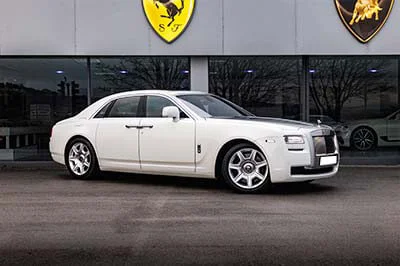
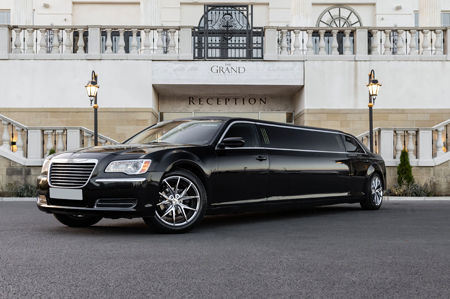
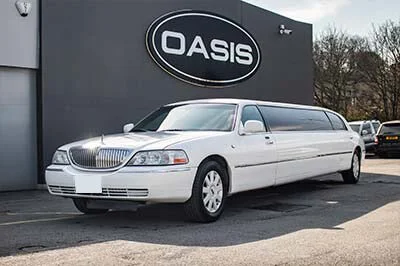
Operators who do this work well do one of two things. They specify the vehicle make, model, and registration in writing before the night, so the group knows what they are looking for. Or they have the driver step out of the vehicle when the group approaches, so the customer sees a person they can identify rather than just a row of similar dark saloons.
The booking should confirm which approach the operator uses. An operator who does neither expects the group to find the vehicle by magic, which is the failure mode most likely on a busy event night.
The other timing detail that matters is when the driver should arrive. The driver who turns up at the exact end time of the concert finds the venue already emptying and the streets becoming congested. The driver who arrives twenty minutes earlier and waits at the agreed pickup point is ready when the group emerges.
The booking should be quoted with this buffer in mind. The driver’s arrival time at the pickup point is not the customer’s pickup time. The driver is there earlier so that the customer can leave at their own pace, not chasing a slot.
Operators who quote return journeys at the exact concert end time are quoting optimistically. The booking will work some of the time and fail when the concert overruns or the venue empties faster than expected.
A common one: a group books a chauffeur for a Manchester AO Arena concert. The outbound journey works. The return is arranged for the official concert end time, but the concert overruns by fifteen minutes. The driver, parked at the designated pickup zone, is moved on by stewards before the group emerges. The group cannot reach the driver by phone because of signal congestion. The pickup eventually happens forty minutes later than planned, with the group having walked to a different location to find the vehicle.
Another: a group books a chauffeur for a Sheffield Utilita Arena concert with a pre-agreed pickup point on Broughton Lane. The driver is there ten minutes before the concert ends. The group walks the short distance, identifies the vehicle by the registration sent the day before, and the pickup happens within five minutes of the group emerging.
A third: a group books a Leeds First Direct Arena pickup without specifying a meeting point. After the concert, the driver and the group are in two different locations within a quarter-mile radius. The phone calls fail. The driver eventually finds the group by driving past slowly with the hazards on, after thirty-five minutes of searching.
A specific pickup point agreed in writing at the booking stage, not improvised on the night.
A vehicle make, model, and registration confirmed to the customer before the concert.
A driver familiar with the specific venue’s post-event traffic management and pickup pattern.
A return timing buffer that has the driver in position before the venue empties.
A backup coordination method that does not rely on phone signal at the venue.
Oasis Limousines runs concert and arena bookings for the major venues across the region, including the Manchester AO Arena, Co-op Live, the First Direct Arena in Leeds, and the Utilita Arena in Sheffield. Bookings include a specific pickup point agreed at the booking stage and a vehicle identification confirmed to the customer before the night.
Drivers familiar with the specific venue and its post-event patterns are assigned to the booking. The return timing builds in a buffer so that the driver is in position before the venue empties, reducing the risk of being moved on by stewards or stuck in post-event traffic.
To discuss a concert or arena booking, contact Oasis with the venue, the date, the group size, and the planned pickup location for the outbound journey.