Christmas party transport is the corporate booking category most consistently left until too late. The party itself is in the diary by September. The venue is confirmed by October. The transport is usually booked in November, by which point the available vehicles are the ones nobody else wanted. Companies that book the previous January get a different experience.
This is not a marketing line. It reflects the actual supply pattern in the chauffeur and minibus market across December, which is the single tightest month of the year for vehicle availability outside the wedding season peak.
December in the chauffeur market is unlike any other month. Corporate Christmas parties run across roughly four weekends, with the heaviest concentration in the second and third weeks. Friday evenings between 6pm and 8pm see hundreds of bookings across any given city, all competing for the same pool of vehicles.
The pool is finite. Reputable operators in West Yorkshire, Manchester, and the wider region have a known number of executive saloons, minibuses, and larger vehicles. Once those are booked, the only options left are operators with older vehicles, less experienced drivers, or operators who take bookings beyond their actual capacity and subcontract on the day.
Companies that book in January or February for the following December get the pick of the fleet. Companies that book in November get whatever is left. The difference in vehicle quality, driver experience, and reliability between these two groups is significant.
The outbound journey for a Christmas party is relatively easy to manage. The company specifies a pickup time at the office or a meeting point, the vehicle arrives, the group is taken to the venue. The journey is predictable.
The return journey is the problem. Christmas parties run late. The original 11pm pickup becomes 11.45pm because the dancing is in full swing. The group splits because some people want to leave at 10.30 and others want to stay until midnight. The drop-off addresses are spread across the city or beyond it.
Operators handle this in different ways. Some build the flexibility into the booking. Others charge waiting time from the original pickup. A few simply leave at the agreed time and the late finishers are in taxis.
The booking decision is to ask, specifically, what happens if the return is forty-five minutes later than planned and the group needs to split. A serious operator will give you a defined answer. An unprepared one will deflect.
Christmas party transport often involves dropping employees at their home addresses across a wide geographic area. The booking covers a single vehicle picking up at the office, going to the venue, and then dropping ten or fifteen people at their houses across the city and the suburbs.
This is harder than it looks. The optimal drop-off order needs to be calculated, the addresses need to be confirmed in advance, and the driver needs to know the route before the night starts. Calculating this in the vehicle at 11pm with a group of slightly tired employees and conflicting suggestions about who lives nearest is not the right approach.
Companies that handle this well share the drop-off addresses with the operator in advance. The driver maps the route, sequences the drops in an efficient order, and the journey ends in two hours rather than three. Companies that do not share the addresses in advance end up with a journey that runs significantly longer than the booking covers.
Most companies organising Christmas party transport do so primarily for the safety reason. Employees should not be driving home after the party. The transport is the alternative.
This works only if the transport actually covers the journey home. A vehicle that drops the group at the city centre at 11pm and leaves is not really solving the problem. The employees standing on the pavement at 11pm are now looking for taxis, and the company’s safety provision has ended exactly where the risk begins.
The transport that meets the safety case is the multi-address home drop-off, not the venue drop-off. This is more expensive, requires more planning, and is the booking that actually delivers what the company is paying for. The shorter, cheaper booking is a tax-deductible gesture rather than a genuine safety provision.
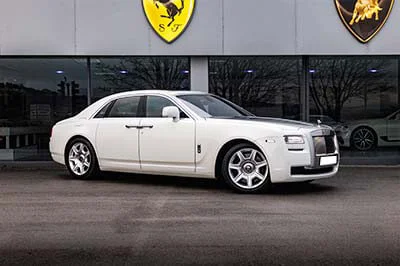
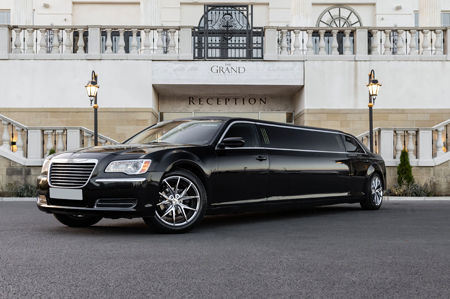
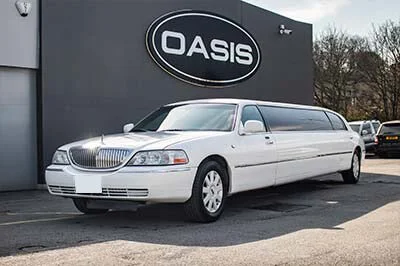
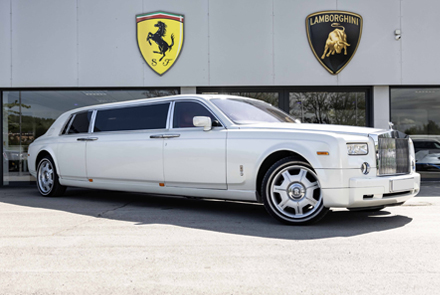
The vehicle for a Christmas party booking depends on the group size and the company’s tone. A small senior team might book a stretch limousine for a single executive group. A larger company will book minibuses, or multiple vehicles, to cover the full party.
The mistake to avoid is booking the wrong category of vehicle. A stretch Hummer for a senior partners’ dinner is the wrong tone. A minibus for a small executive team is unnecessarily transactional. Match the vehicle to the corporate context, not just to the headcount.
For larger parties, multiple vehicles working together is often better than one large vehicle. The drop-offs can run in parallel, the routing is more efficient, and the journey home ends sooner for everyone.
Christmas parties are corporate events, even when the atmosphere is relaxed. The drivers turning up at the office or venue reflect on the company hosting the party. A driver in a clean suit, with the right manner, is part of the corporate impression. A driver who looks tired, dresses casually, or treats the group as a Friday night taxi job is not.
This sounds obvious. In practice, the standards across operators in December vary significantly. The peak demand pulls in drivers who do not normally do corporate work, and the presentation slips. Companies that book early get the regular corporate drivers. Companies that book late get whoever is available.
Specify the presentation standard at the booking stage and confirm that the operator can meet it in December specifically.
A common one: a mid-sized company books Christmas party transport in mid-November for a party on the second Saturday in December. The only available option is a single minibus from an operator with two vehicles, both of which are booked for earlier in the evening. The pickup is delayed by forty minutes because the earlier booking ran late. The party starts twenty minutes after the first guests arrived from elsewhere.
Another: a company books a venue drop-off only, on the assumption that employees will arrange their own transport home. At midnight, the group is stranded in the city centre, taxis are scarce, and the employees who were drinking are sharing taxis with employees they barely know. The safety case the company built around the booking collapses.
A third: a company books a multi-address drop-off but does not share the addresses in advance. The driver tries to calculate the route at the venue while the group is boarding. The journey takes three hours instead of the booked two. The operator charges for the extra time and the company is surprised by the invoice.
Booking early, ideally January or February for the following December.
A return journey that covers the realistic finish time, not the optimistic one.
Drop-off addresses shared with the operator in advance, with the route planned.
A vehicle and driver appropriate to the corporate context.
A clear policy on what happens if the return runs late or the group splits.
Oasis Limousines runs corporate Christmas party transport across Bradford, Leeds, and the wider region. December bookings are accepted from January onwards and the fleet is allocated to confirmed bookings rather than held back for late demand. Multi-address drop-offs are planned in advance with the company’s coordinator, and the route is sequenced for efficiency.
For larger parties requiring multiple vehicles, the booking is managed as a coordinated job with drivers communicating throughout the night. The return finish time is flexible within reasonable limits, and the policy on overruns is agreed at the booking stage rather than negotiated at midnight.
To discuss Christmas party transport for the coming December or to book early for the following year, contact Oasis with the date, the group size, and the geographic spread of the drop-offs.