Wedding car hire is one of those planning decisions that looks simple until you sit down and actually work it out. Most articles on the subject give you the same vague answer: “it depends on your wedding”. That is true, but it is also useless. What you actually need is a way of calculating the right number of vehicles for your specific day, based on who is travelling, where they are going, and when they need to arrive.
That is what this guide does. By the end, you will know exactly how many wedding cars your day requires, where couples typically overbook or underbook, and how to avoid the transport mistakes that cause genuine stress on a wedding morning.
At Oasis Limousines, we see the same two mistakes over and over again.
The first is underbooking. A couple hires one beautiful bridal car, then realises three days before the wedding that the bridesmaids, the mother of the bride and two flower girls also need to get to the ceremony, ideally not in a cousin’s hatchback with a child seat wedged in the back. Late additions are sometimes possible, but availability in peak season is tight, and last-minute bookings rarely get the vehicle the couple would have chosen with more time.
The second is overbooking. Some couples hire three or four cars because it feels safer, then discover that two of them sit empty for most of the day. Chauffeur-driven wedding cars are typically booked for a minimum period, so an unused vehicle is money that could have gone towards the honeymoon, the photographer or the bar tab.
The right number of cars is not a matter of taste. It is a logistics calculation, and it is one you can do in about ten minutes with the framework below.
Before you look at a single vehicle, write down everyone who needs formal transport on the day. For most UK weddings, that list includes some combination of:
Now be honest about who genuinely needs a hired car and who simply needs a lift. Groomsmen with their own cars, guests staying at the venue, and family members happy to share lifts do not need chauffeur-driven wedding cars. The formal transport is for the people at the heart of the day and anyone whose comfort or mobility makes organised travel the sensible choice.
Once you have your list, count heads and group them by departure point and arrival time. Those two details, more than anything else, determine how many vehicles you need.
A single wedding car works well when the ceremony and reception are at the same venue, the bridal party is small, and everyone else has their own arrangements. The car collects the bride and father of the bride, delivers them to the ceremony, then waits to carry the newlyweds onwards for photographs or simply around the grounds.
One car is also the standard choice for intimate weddings, registry office ceremonies and elopements. If your guest list is under thirty and your bridal party fits in the wedding cars of friends and family, one hired vehicle is usually enough.
The one caveat: check the seating. A classic car often seats only two or three passengers in real comfort once a full wedding dress is involved. A bride, her father and two bridesmaids will not fit in most vintage vehicles, no matter what the brochure photo suggests.
The majority of weddings we drive for use two vehicles, and there is a good reason for it. The typical arrangement looks like this:
This staggered arrival is not just tradition. It solves a real problem. If everyone travels together, the bride arrives to a crowd of her own bridal party still climbing out of the car, adjusting dresses and finding bouquets. Two cars mean the entrance happens in the right order, calmly.
Two cars also cover the groom’s side if the timings are planned well. The bridesmaids’ car can collect the groom and best man first, drop them at the venue early, then return for the bridal party. This double-run approach works when the pickup points are within about fifteen minutes of the venue. Beyond that, the maths gets risky, and a third vehicle becomes the safer option.
You are likely to need a third car when any of the following apply:
For larger weddings, some couples add a minibus or executive people carrier for guest transport rather than a third traditional wedding car. Moving twelve guests between a church and a reception venue in one vehicle is far more practical than a convoy, and it means nobody’s uncle is navigating country lanes after two glasses of champagne.
A wedding car does not just make one journey. On a typical day it might collect the bridal party, deliver them, wait, carry the couple to a photograph location, then move everyone to the reception. Each leg takes time, and wedding-day traffic is not the same as Tuesday-afternoon traffic. Rural venues on single-track roads, city-centre ceremonies on a Saturday, and anything near a football ground on match day all need contingency built in.
A rule of thumb we give couples: if any single leg of the journey exceeds thirty minutes, do not plan for one car to make a double run. The margin for error is too small on a day where being twenty minutes late is not an option.
Couples plan the arrival meticulously and forget the departure. Who takes the bridesmaids from the ceremony to the reception? How does the mother of the bride get home at midnight? If your ceremony and reception are at different venues, everyone who arrived by wedding car needs a plan for the next leg. Sometimes that is the same cars making a second run. Sometimes it is guests offering lifts. Either way, decide it now rather than in the car park.
A full ball gown or a dress with a long train effectively occupies two seats. If the bride is travelling in a structured dress, the bridal car should carry no more than one other passenger. This is the single most common seating miscalculation we see, and it is why a couple planning “the bride, dad and two bridesmaids in one car” almost always ends up needing a second vehicle anyway.
If your photographer has planned couple portraits at a separate location, the wedding car is part of that plan. Factor the journey and the waiting time into your booking, and tell your car provider in advance. A chauffeur who knows the schedule can position the vehicle for photographs, keep it immaculate between legs, and have the doors open the moment the photographer is ready.
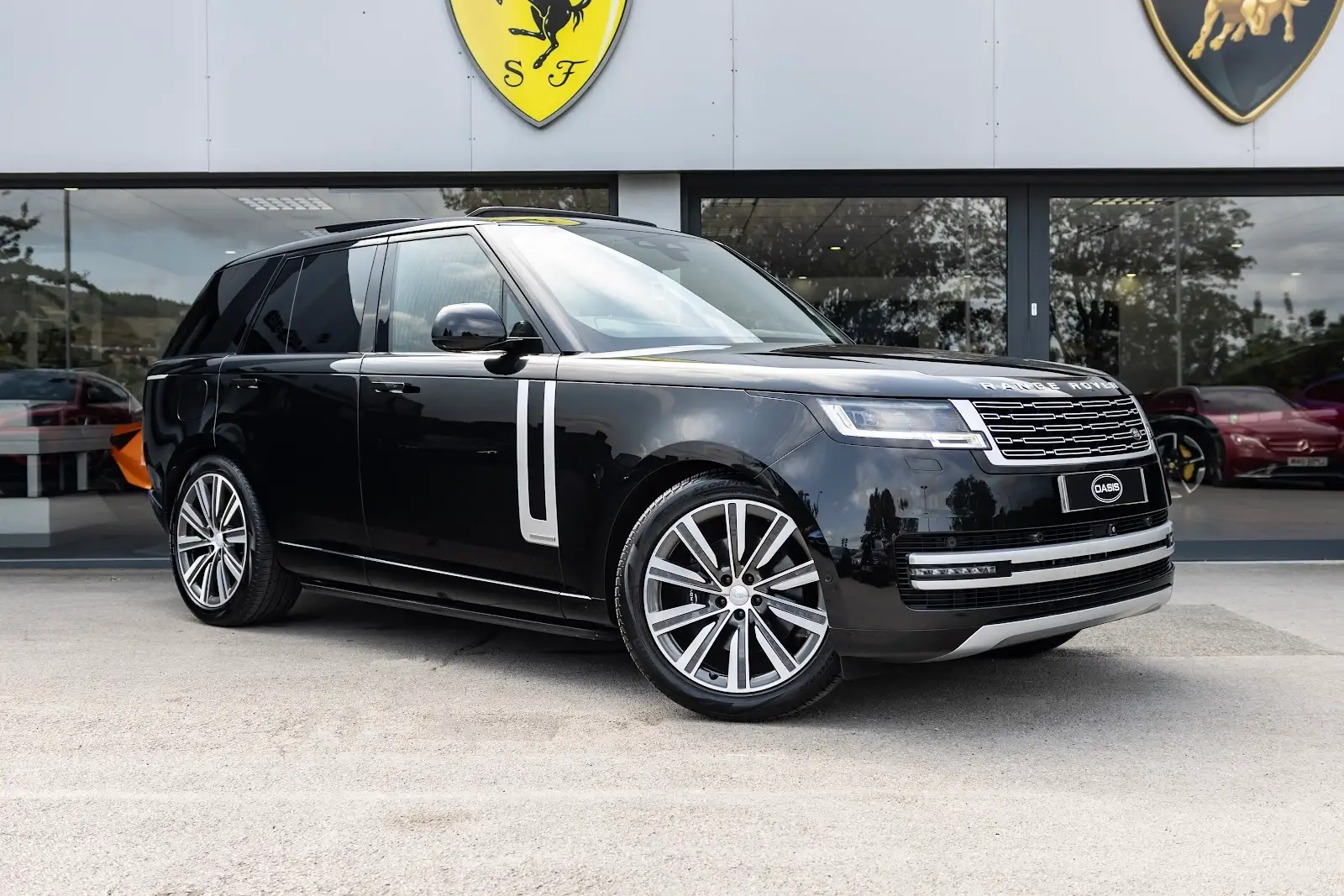
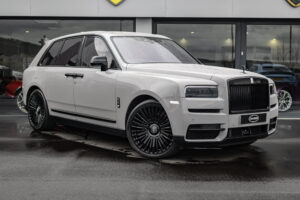
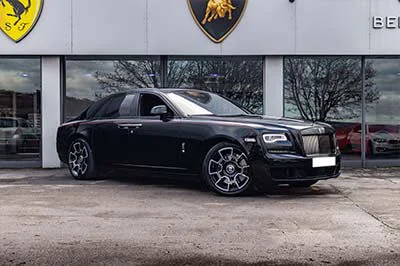
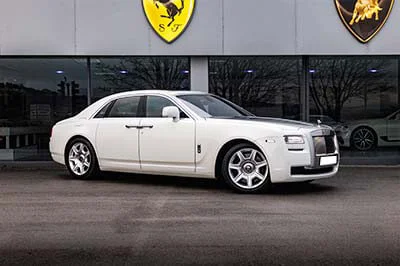
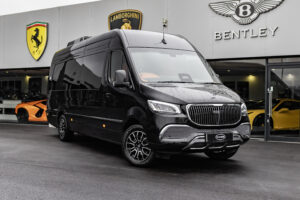
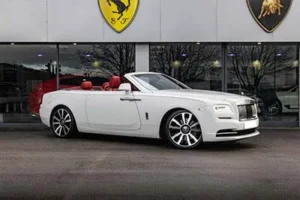
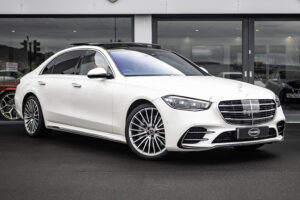
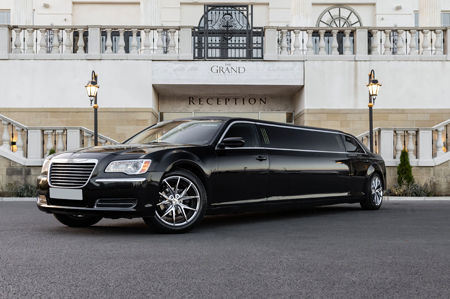
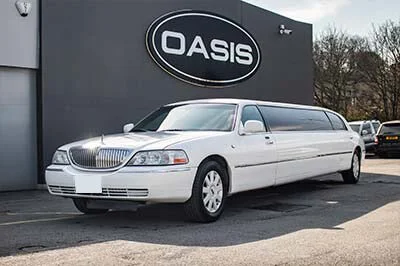
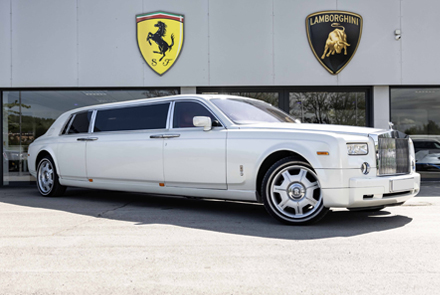
Modern luxury wedding cars such as a Mercedes S-Class or a Rolls-Royce Ghost typically carry three passengers comfortably. Vintage cars often carry two. Stretch limousines carry eight or more, which is why one limousine sometimes replaces two traditional cars for a bridal party. If your priority is moving a large group in style, one bigger vehicle may serve you better than multiple smaller ones. If your priority is the classic arrival photograph, the traditional car plus a support vehicle is the stronger combination.
The single-venue city wedding. Ceremony and reception at the same hotel, bridal party of three. One chauffeur-driven S-Class collected the bride and her father, made a short scenic loop so the arrival landed exactly on time, then remained on site for photographs. One car, no waste, flawless timing.
The church-to-barn classic. Church ceremony, barn reception eleven miles away, bridal party of five. Two cars: the first carried three bridesmaids and the mother of the bride, the second carried the bride and father. After the ceremony, car one moved the bridesmaids to the barn while car two took the couple via a hilltop photograph stop. Two cars, four journeys each, and nobody stood waiting in a churchyard.
The two-town wedding. Bride preparing at her parents’ home, groom’s party at a hotel forty minutes away, ceremony in between. Three vehicles: one for the groom’s side, two for the bride’s side. A double run was mathematically possible on paper and would have failed the moment the morning ran fifteen minutes behind, which wedding mornings reliably do.
Here is the part of wedding car hire that rarely gets discussed. The vehicle is the photograph; the chauffeur is the experience. An experienced wedding chauffeur has driven the route before or reconnoitred it in advance, knows where to pause for the best arrival shot, carries an umbrella for British weather, and quietly manages timings so the couple never has to look at a watch.
When you compare wedding car hire quotes, ask what the chauffeur actually does on the day. Is the route checked beforehand? Is there ribbon and dressing included? What happens if the ceremony overruns? The answers separate a professional wedding transport service from a nice car with a driver, and they matter far more than a small difference in price.
If you want the short version, use this:
Work through those six points and the answer for your wedding becomes obvious rather than stressful.
Every wedding we drive starts with the same conversation: who is travelling, from where, and when do they need to arrive. From there, we build a transport plan that fits the day rather than forcing the day to fit the cars. Our fleet covers modern luxury saloons, stretch limousines and executive vehicles, all chauffeur-driven, all dressed for the occasion, and all backed by chauffeurs who treat your timings as non-negotiable.
If you are working out your wedding day transport and want a straight answer on how many cars your plans actually need, get in touch with Oasis Limousines. We will talk through your venues, your party and your timings, and give you an honest recommendation, even if that recommendation is fewer cars than you expected to book.
Because the goal is not to sell you vehicles. It is to make sure that on the one morning where everything must run to time, it does.